
SHARING the VISION
Read More About Our Impact
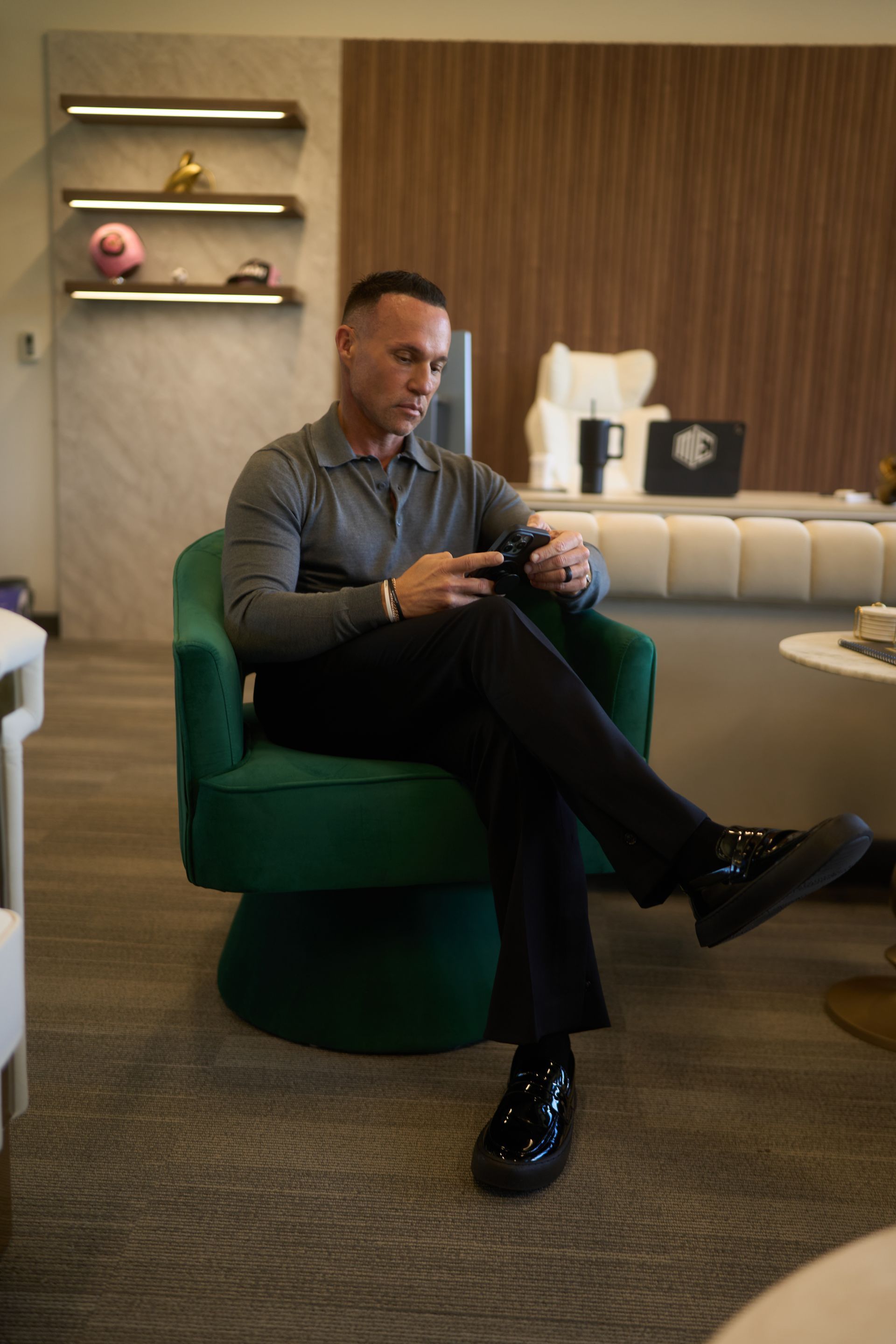
People ask me this more than almost anything else. Usually it comes with an apology attached, like they need to justify why they're even asking. You don't need to justify it. You just need an honest answer, so here's mine. You're Probably Ready If You're already successful by most outside measures, but something about how you got there no longer sits right. That gap between how things look and how they feel is usually the first real signal. It doesn't announce itself loudly. It shows up as a quiet flatness on a day that should feel like a win. You're willing to look honestly at what you actually want, not just what you're supposed to want. That's harder than it sounds. Most of us are fluent in the second version and out of practice with the first. You want someone who will tell you the truth, not just what keeps you comfortable. If you're looking for agreement, coaching won't feel good. If you want real, it will. You're ready to do the work between conversations, not just during them. An hour of talking doesn't change anything on its own. What you do with it the rest of the week does. You're Probably Not Ready If You're looking for a quick framework or a checklist with no real reflection involved. That's not a criticism. Sometimes that's exactly what a season of your life calls for, and there's no shame in it. You want someone to hand you a plan you can follow without changing anything about how you think or lead. Coaching isn't a plan. It's a mirror with a person attached. You're not able to commit real time to this right now. That's honestly fine. If that's where you are, start smaller. A workbook is a real place to begin, and there's no rule that says you have to jump straight to the deep end. Why Marc's Style Fits People Who Are Truly Ready Here's what I bring to this, in plain terms. I've been in rooms with people running major companies, teams, and investments, and I've had just as many conversations with one person quietly trying to figure out what's next. Different rooms, same posture: show up, pay attention, and look for where I can actually make a difference. That's not a script. It's just how I approach any conversation that matters, whether the stakes look big from the outside or not. I don't hand out a formula that works for everyone, because I don't believe one exists. I'm not going to tell you your path should look like anyone else's. I'm going to help you find yours, which takes longer than a framework but holds up a lot better once you have it. I keep a limited number of active coaching relationships at any time, because this only works if I can actually show up for the people I'm working with. That's not a scarcity tactic. It's the honest reason I can actually do what I'm describing here instead of just saying I do. And I'll tell you the truth even when it's not the easy thing to hear, because the alternative is wasting your time and mine. If you wanted comfort, you'd have stopped reading a while ago. The Real Test Ask yourself one question: are you ready to find your own sense of purpose and actually build something on it, even if that means looking at parts of yourself you've been avoiding? If the honest answer is yes, that's your readiness. Not a certain age, title, or amount of success first. Just that. If you're not sure yet, that's fine too. Start with a real conversation and find out.

I talk to a lot of people about rebuilding. Careers, health, relationships with themselves. And almost every time, there's a moment in the conversation when they mention someone standing next to them through it, or that no one was, and both of those facts matter more than most people give them credit for. I didn't rebuild anything by myself. I want to be honest about that, because the version of this story that makes it sound like one person willed their way back usually leaves out the person who actually made it possible. Success Doesn't Test a Relationship. Struggle Does. Anyone can stand next to you when things are going well. That's not where you find out what you have. You find out when things are hard, when you're not your best self, when there's nothing impressive about the version of you sitting across the table. The people who stay through that aren't staying for what you can offer them. They stay because of who you actually are underneath it all. That's what the right partner gives you access to. Not comfort. Not applause. A kind of honesty that only works because trust was already there before you needed it. What "Right" Means I don't think the right partner is the one who makes your life easier. Easier isn't really the goal, and it's not what marriage is for. The right partner is the one who makes you more honest, more accountable, more willing to look at the parts of yourself you'd rather not look at, because they're looking at you the whole time with love instead of judgment. That's hard to find and even harder to feel worthy of. It's not about finding someone who completes a picture. It's about finding someone whose presence makes you want to actually become the person you're capable of being, and who's patient enough to watch that happen slowly instead of demanding it happen all at once. Why This Belongs in a Conversation About Purpose I talk a lot about building a life on purpose instead of just performing one. None of that happens in isolation. The people closest to you either reinforce the version of yourself you're trying to build, or they quietly pull you back toward the version you're trying to leave behind. That's true of a business partner, a friend, and especially a spouse, because nobody else has that much daily access to who you actually are. If you have someone who sees the whole picture, the boardroom version and the version at home on a hard Tuesday, and chooses to stay close to both, that's not luck. That's one of the most important things you'll ever have. Don't take it for granted, and don't assume it just happens on its own. It takes the same real work as anything else worth having.

I've been in rooms with people running major companies, teams, and investments. I've also had a lot of one-on-one conversations with people just trying to figure out what's next. Here's something I've noticed in both rooms: the leaders who actually move people forward are the ones who know them, not just their job titles. It's easy to confuse managing a team with connecting to one. You can run a tight meeting, hit every deadline, and still have no real idea what's going on with the people doing the work. I've led that way before. It's efficient right up until it isn't, and then you find out the hard way that nobody actually trusted you enough to tell you something was wrong. What Connection Actually Means I'm not talking about team-building exercises or knowing everyone's favorite coffee order, though there's nothing wrong with either. I'm talking about something simpler and harder: actually paying attention to the people you're responsible for. That means noticing when someone's off before it shows up in their work. It means asking a real question and then doing the harder thing, actually listening to the answer instead of waiting for your turn to talk. It means remembering what someone told you last month and following up on it, because that's how a person knows they weren't just being polite when you asked. Different rooms, same posture: show up, pay attention, and look for where you can actually make a difference. That's true whether you're talking to a board or to the person two desks down who's been quiet for a week. Why This Is Harder Than It Sounds Most leaders aren't cold. They're busy. Connection takes time that always feels like it's competing with something more urgent, and it's easy to tell yourself you'll get to it once things calm down. Things rarely calm down. But here's what I've found: the cost of not connecting doesn't show up on a normal Tuesday. It shows up later, when someone leaves without warning, when a problem gets worse because nobody felt safe naming it early, when the team performs fine on paper but nobody actually wants to be there. By the time you notice, the gap has already cost you something real. The Return on Actually Knowing Your People When people know you see them, not just their output, something shifts. They tell you the truth sooner. They bring you problems while they're still small. They stay longer, and they mean it more while they're there. That's not a soft skill sitting off to the side of real leadership. It's the thing that makes everything else you're trying to build actually hold up. You can have the right strategy, the right plan, the right numbers, and still watch it come apart if the people executing it don't believe you actually know who they are. Where to Start You don't need a program for this. You need one real conversation with someone on your team this week, where the goal isn't to check a box or solve a problem. It's just to see them. Ask what's actually going on, not what's on the status report. Then sit with the answer instead of rushing to respond to it. That's the whole practice. Do it enough times and it stops being a technique. It becomes how you lead.

You can't think clearly in a body you're neglecting. I learned that the hard way, and I still relearn it every time I let it slide. For a long time, I treated my body like it was separate from my work. Work was the mind: strategy, decisions, pressure, performance. The body was just what carried the mind around. I skipped meals to get through a stretch of meetings, ran on four hours of sleep because there was always more to do, and told myself I'd deal with it later. Later never came on its own. It came when something broke. Here's what I know now that I didn't know then: your body isn't separate from your ability to lead, to coach, to show up for the people counting on you. It's the foundation underneath it all. When I'm not sleeping, not moving, not eating like I actually respect myself, the effects show up exactly where I can least afford them. Patience goes first. Then clarity. Then the ability to sit with someone else's hard moment without rushing to fix it just to get back to my own list. That's not a productivity problem. That's a purpose problem. You can't build something that matters to you on a foundation you're actively wearing down. I'm not talking about optimization culture. I'm not telling you to track every macro or wake up at 4:30 to prove something to yourself. That's a different kind of performing, and I've done enough performing to last a lifetime. I'm talking about basics, done consistently, because you've decided you're worth the maintenance: Move your body most days, even if it's just a walk. Not for the calorie burn. For what it does to your head afterward. Sleep like it's part of the job, because it is. The clearest decisions I've ever made came after real rest, not after grinding through exhaustion and calling it commitment. Eat like someone who has somewhere to be tomorrow. Energy crashes at 2pm aren't a personality trait. They're usually a signal. Build in actual recovery, not just the absence of a meeting. Your nervous system doesn't know the difference between a hard workout and a hard week of decisions. Both need a place to land. Why This Matters More Once You're Leading Others When you're responsible for a team, a family, a room full of people looking to you, your capacity isn't just yours anymore. It's what everyone around you is drawing from. I've sat across from people running real organizations who could talk fluently about quarterly targets and couldn't tell me the last time they'd slept eight hours. That gap always shows up eventually, usually in the moments that matter most: the hard conversation, the crisis, the decision that can't wait for you to feel better. Taking care of your body isn't the soft part of leadership. It's the part that makes the rest of it possible. The Real Question If you're building something with real purpose behind it, whether that's a business, a family, a second chapter, ask yourself honestly: is your body currently able to carry that weight, or are you hoping it holds up long enough for you to get there anyway? I'd rather build this slower and still be standing at the end of it. That's not weakness. That's the whole point.