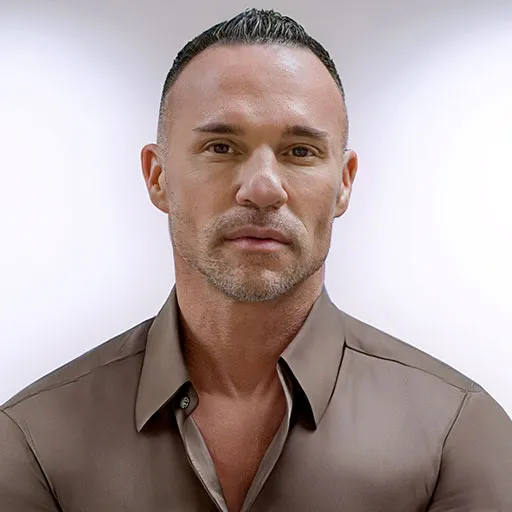
Marc Effron’s High-Performance Procrastination Solutions
Procrastination is often framed as a simple time-management problem. The usual advice is familiar. Use a planner. Break the task into smaller steps. Remove distractions. Start earlier. While those tactics can be useful, they rarely explain why highly capable people continue to delay work that clearly matters.
At senior levels of leadership and performance, procrastination is rarely about laziness. It is more often tied to complexity, internal pressure, cognitive overload, perfectionism, or the psychological weight attached to a decision or deliverable. The task itself may not be difficult in a technical sense. It may carry consequences that heighten hesitation.
For Marc Effron, procrastination is best analyzed as a performance variable. When leaders delay strategic work, difficult conversations, hiring decisions, or high-visibility initiatives, the pattern is rarely random. It usually reflects structural friction inside the leader’s operating system. Something about the decision weight, internal standards, cognitive load, or perceived exposure is creating resistance. Until that resistance is identified and addressed, delay tends to repeat itself.
That is where performance coaching and leadership coaching begin to change the equation. The goal is not simply to get more done. The goal is to understand why certain forms of avoidance persist and how leaders can restore disciplined follow-through under pressure.
What Is Procrastination in High-Performance Environments?
In high-performance environments, procrastination does not always look obvious. It is not limited to missed deadlines or visible inactivity. In many cases, it appears in more sophisticated forms. A leader keeps researching instead of deciding. A founder keeps refining a presentation that is already ready enough. An executive delays a difficult conversation while convincing himself that more context is needed.
What is procrastination in this context? It is the gap between knowing what must be done and repeatedly failing to move on it at the appropriate time. That gap can be filled with activity, but activity is not always progress. Delay often disguises itself as preparation, optimization, or strategic patience.
This is one reason procrastination can remain unaddressed for long periods in accomplished professionals. The individual still appears productive. Meetings are attended. Messages are answered. Secondary work gets completed. Yet the task with the greatest strategic importance continues to move to the edge of the day, the week, or the quarter.
Marc’s approach treats this pattern analytically. Instead of asking why someone lacks motivation, he examines where friction consistently appears, what kind of pressure surrounds the delayed work, and what internal narrative is making movement harder than it should be.
The Forms of Procrastination That Affect Leaders Most
The forms of procrastination that affect senior leaders are often more complex than simple distraction. One common form is perfection-driven delay. The work is postponed because the standard for beginning or finishing it has become unnecessarily high. The leader tells himself the idea needs more refinement, the strategy needs more validation, or the message needs more polish. In reality, the threshold for action has become distorted.
Another form is decision avoidance. Certain tasks require commitment, and commitment closes off alternatives. Hiring a senior executive, entering a market, restructuring a team, or confronting underperformance can all trigger hesitation because each decision carries real consequences. Delay becomes a way of postponing exposure to risk.
A third form is identity-based procrastination. Some work activates fear around visibility, judgment, or personal standards. The task is not being delayed because it is unclear. It is being delayed because completing it would invite scrutiny, and scrutiny can threaten how a high performer sees himself.
There is also overload-based procrastination. When leaders operate inside constant cognitive fragmentation, they lose the mental traction required for meaningful strategic work. The issue is not willingness. The issue is that the brain has become saturated by lower-level demands.
Understanding these forms of procrastination matters because the solution depends on the source. Not all delays are created by the same mechanism, and generic advice often fails because it treats every pattern as identical.
Why High Performers Continue to Delay Important Work
High performers often assume they should be immune to procrastination because they are disciplined in other areas of life. They are used to pressure. They have built careers on execution. That assumption can make the pattern harder to confront honestly.
In many cases, procrastination persists because the task has become entangled with meaning. The delayed presentation is not just a presentation. It represents visibility, judgment, and possible failure. The difficult conversation is not just a conversation. It represents conflict, authority, and the risk of relational fallout. The strategic decision is not just a choice. It represents accountability.
When tasks carry this level of internal weight, delay becomes psychologically functional. It temporarily relieves pressure. The problem is that the relief is short-lived. As the deadline approaches, stress compounds, self-trust erodes, and the leader begins reinforcing a narrative of inconsistency that may not be accurate but becomes emotionally persuasive.
Marc’s coaching work helps leaders identify this cycle before it becomes normalized. The issue is not simply how to stop procrastinating in a superficial sense. The issue is how to reduce the hidden pressure attached to execution so that disciplined action becomes available again.
How to Overcome Procrastination Without Relying on Willpower Alone
Many people searching for procrastination solutions assume the answer is greater willpower. In performance environments, that approach usually has limited durability. Willpower fluctuates. Systems endure.
How to overcome procrastination begins with diagnosis. Leaders need to determine whether the delay is caused by perfectionism, unclear ownership, decision fatigue, emotional avoidance, or overstimulation. Once the source is visible, the response becomes more precise.
This is why science-backed ways to stop procrastinating tend to focus on behavior design rather than motivational speeches. The brain is more likely to engage in difficult work when ambiguity is reduced, the next action is clearly defined, friction is minimized, and completion standards are realistic. High performers benefit from these same principles, but the application must be elevated to match the complexity of their work.
Marc’s high-performance procrastination solutions often involve redesigning the conditions around execution. That may include narrowing the scope of the first move, creating hard decision thresholds, separating strategic work from reactive communication windows, or identifying where perfection has become a substitute for progress. The objective is not to lower standards. It is to prevent distorted standards from delaying action indefinitely.
How to Stop Procrastinating by Rebuilding Self-Trust
One of the least discussed consequences of procrastination is damage to self-trust. When leaders repeatedly delay work that matters, they begin to question their own reliability. That internal erosion can become more costly than the delayed task itself.
How to stop procrastinating, then, is not only about output. It is also about restoring confidence in one’s own follow-through. This requires consistent completion under conditions that are appropriately demanding, not performative bursts of productivity that cannot be sustained.
Leaders rebuild self-trust by making the work more executable, not by shaming themselves into motion. They create protected cognitive space for important tasks. They stop confusing urgency with significance. They become more honest about what they are avoiding and why.
This is also how to get out of the habit of procrastination over time. Habits change when the system that produces them changes. If the same overload, the same fear pattern, and the same perfection threshold remain intact, the behavior usually returns.
Performance coaching provides an external structure for this recalibration. Leaders can examine their procrastination patterns without moralizing them, identify where delay is disrupting strategic effectiveness, and build more reliable execution rhythms across weeks, quarters, and decision cycles.
Procrastination Solutions as a Leadership Discipline
For senior leaders, procrastination is rarely a minor productivity issue. A significant delay affects team momentum, decision quality, communication clarity, and organizational confidence. Work that sits too long begins to accumulate secondary costs, many of which are invisible until they have already spread.
Marc Effron’s coaching philosophy approaches procrastination solutions as part of a broader leadership discipline. His practice remains anchored in performance coaching, which differs from life coaching as it is more defined, with leadership outcomes consistently serving as the central objective. The distinction matters. The work is not about finding temporary hacks to force productivity. It is about helping leaders think more clearly, execute more consistently, and operate with less internal friction over long arcs of responsibility.
Executives seeking to understand what procrastination is, why certain forms of procrastination keep recurring, or how to stop procrastinating without sacrificing standards often discover that the real issue is not motivation. It means there is misalignment between pressure, identity, and execution.
Leaders interested in exploring how structured performance coaching can help them overcome procrastination, strengthen follow-through, and improve decision discipline can contact Marc Effron to discuss whether this work aligns with their current stage of growth.